
BIAS
With the seemingly unavoidable presence of implicit bias, how do we adjust behavior to approach justice in the criminal-legal system?
One of the biggest threats to the “justice” of the criminal-legal system is the subconscious force of implicit bias; it is one of human psychology’s biggest threats to a functioning system of accountability. According to the results of Harvard’s Implicit Association Test for race, 68% of participants show automatic preference for European Americans over African Americans (with 24% in the “strong preference” category). Bias starts as a cognitive bug built in to evolution where humans favor members of their “in-group,” and is worsened by racially oppressive social environments that favor group separation and white supremacy.
The amygdala plays a key role in the wiring of bias, and reacts with an automatic threat response to members of a racial “out-group”. However, the prefrontal cortex is capable of mitigating this automatic response through conscious reasoning; the key is to be aware of the amygdala response, and learn how to correct it.
Assess your bias by taking an Implicit Association Test
Read more from MIT on the brain mechanisms of bias, and how to control it
The law only protects from explicit bias, operating on the assumption that discrimination is only done outwardly. However, bias below consciousness is a serious, hard to track problem that often puts lives in danger.
-
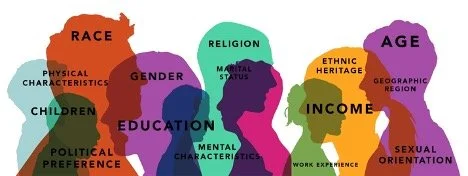
The Harvard Implicit Association test offers a simple way for people to assess their racial bias, as well as many other categories including religion, gender, and sexuality.
Responsibility for IAT is controversial. The immediate response itself seems to be out of one’s control, but how you respond to bias can be consciously decided in the moment. Mitigating bias requires an awareness that it exists in the first place.
-
A test that associates race with recognizing an object as a gun vs a neutral object reveals bias in this area, which contributes to the prevalence of police shootings of Black Americans. Similar racial biases can impact juries and judges in how they evaluate defendants.

Most test-takers are implicitly biased towards European-Americans.

Most test-takers associate Black with weapons and white with neutral objects. This is thought to lead to wrongful assumptions that Black people are carrying weapons.
Responsibility for implicit bias is controversial; initial reactions may be involuntary, but responses to bias can be consciously controlled. Mitigating bias requires an awareness that it exists in the first place.
Take an IAT here

Consider…
