

THE SCIENTISTS

Vikash Mansinghka, MIT
Vikash Mansinghka is a Principal Research Scientist at MIT, where he leads the Probabilistic Computing Project. Vikash holds S.B. degrees in Mathematics and in Computer Science from MIT, as well as an M.Eng. in Computer Science and a PhD in Computation. He also held graduate fellowships from the National Science Foundation and MIT’s Lincoln Laboratory. His PhD dissertation on natively probabilistic computation won the MIT George M. Sprowls dissertation award in computer science, and his research on the Picture probabilistic programming language won an award at CVPR. He co-founded two VC-backed startups: Prior Knowledge (acquired by Salesforce in 2012) and Empirical Systems (acquired by Tableau in 2018). He served on DARPA’s Information Science and Technology advisory board from 2010-2012, currently serves on the editorial boards for the Journal of Machine Learning Research and the journal Statistics and Computation, and co-founded the International Conference on Probabilistic Programming.

Donald Hoffman, University of California, Irvine
Donald Hoffman is a cognitive scientist and author of more than 90 scientific papers and three books, including Visual Intelligence: How We Create What We See (W.W. Norton, 2000). He received his BA from UCLA in Quantitative Psychology and his Ph.D. from MIT in Computational Psychology. He joined the faculty at UC Irvine in 1983, and is a full professor in the departments of cognitive science, computer science and philosophy. He received a Distinguished Scientific Award of the American Psychological Association for early career research into visual perception and the Troland Research Award of the US National Academy of Sciences.
Hoffman studies consciousness, visual perception, and evolutionary psychology using mathematical models and psychophysical experiments. His research subjects include facial attractiveness, the recognition of shape, the perception of motion and color, the evolution of perception, and the mind–body problem.
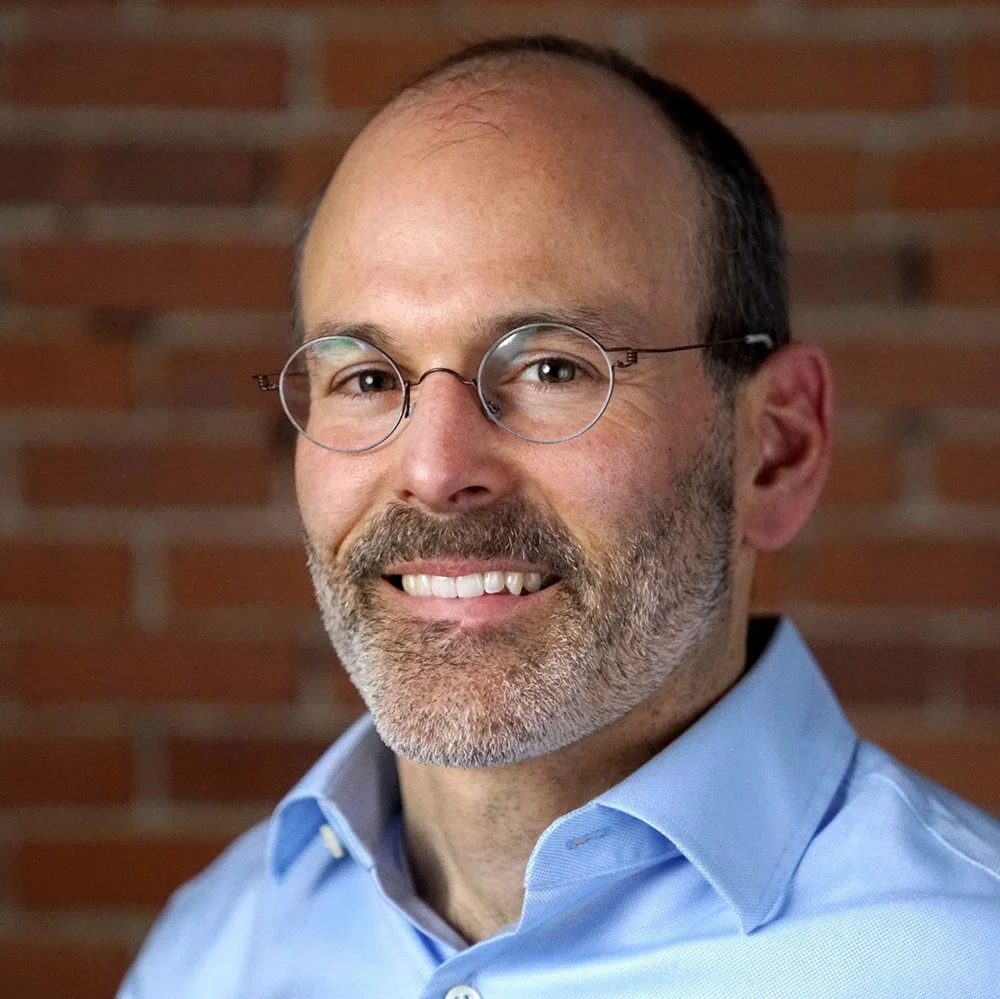
Judson Brewer, Brown University
Judson Brewer, MD, PhD (“Dr. Jud”) is a New York Times best-selling author and thought leader in the field of habit change and the “science of self-mastery”, having combined over 25 years of experience with mindfulness training with his scientific research therein. He is the Director of Research and Innovation at Brown University’s Mindfulness Center and a professor in both Behavioral and Social Sciences and Psychiatry at the Schools of Public Health and Medicine, respectively, at Brown University.
A psychiatrist and internationally known expert in mindfulness training for addictions, Brewer has developed and tested novel mindfulness programs for habit change, including both in-person and app-based treatments for smoking, emotional eating, and anxiety. He has also studied the underlying neural mechanisms of mindfulness using standard and real-time fMRI and EEG neurofeedback.

Jay Sanguinetti, University of Arizona
Jay Sanguinetti, PhD, stands at the intersection of neuroscience, cognitive psychology, and contemplative science. He is a distinguished speaker, scientist, and entrepreneur, as well as a developing meditation teacher. He is the President of Sanmai Technologies, Public Benefit Corporation in Silicon Valley, and the Assistant Director of the Center for Consciousness Studies at the University of Arizona. Specializing in psychophysiological measures such as EEG, fMRI, and eye-tracking, Dr. Sanguinetti has investigated many domains, including the complex neural dynamics of visual perception, emotion, and mindfulness meditation. He has also explored the neural basis of depression, anxiety, and Parkinson’s Disease.
Dr. Sanguinetti’s team is at the cutting edge of neuroscience, exploring innovative forms of brain stimulation, including ultrasound and light-based techniques, to boost memory, perception, and overall well-being. In pioneering work, he teamed up with the prominent meditation teacher and scholar, Shinzen Young, to explore science-informed protocols and neurotechnologies to facilitate mindfulness practice. This collaboration gave birth to the Science Enhanced Mindful Awareness (SEMA) lab at the University of Arizona. The SEMA lab is at the forefront of developing science-based mindfulness protocols that lower the barriers to meditation and may help more people experience the benefits of the practice.

Jason Fung, The Fasting Method
Jason Fung, MD, was born in 1973 and trained in Los Angeles and Toronto as a kidney specialist. He founded The Fasting Method (TheFastingMethod.com) to provide evidence-based advice for weight loss and managing blood sugars, focusing on low carbohydrate diets and intermittent fasting.
It has become obvious that conventional medical treatments are failing patients. Many of today’s chronic medical issues are related to diet and obesity, yet treatments are focused on medications and surgeries. If you don’t deal with the root cause, the problem never improves. A dietary problem requires a dietary solution.
Dr. Fung is the author of The Obesity Code, The Complete Guide to Fasting, and The Diabetes Code. He is also the scientific editor of the Journal of Insulin Resistance and the managing director of the nonprofit organization Public Health Collaboration (Canada), an international group dedicated to promoting sound nutritional information.
MIND TRAINING SCIENCE
When the Society for Neuroscience asked Tenzin Gyatso, the 14th Dalai Lama (the leader of Tibetan Buddhism), to address its annual meeting in Washington, D.C., in 2005, a few hundred members among the nearly 35,000 or so attending the meeting petitioned to have the invitation rescinded. A religious leader, they felt, had no place at a scientific meeting. But this particular leader turned out to have a provocative and ultimately productive question to pose to the gathering. “What relation,” he asked, “could there be between Buddhism, an ancient Indian philosophical and spiritual tradition, and modern science?”
The Dalai Lama, putting action before rhetoric, had already started trying to find answers to his own question. Back in the 1980s, he had sparked a dialogue about science and Buddhism, which led to the creation of the Mind & Life Institute, dedicated to studying contemplative science. In 2000 he brought new focus to this endeavor: he launched the subdiscipline of “contemplative neuroscience” by inviting scientists to study the brain activity of expert Buddhist meditators—defined as having more than 10,000 hours of practice.
The evidence amassed from this research has begun to show that meditation can rewire brain circuits to produce salutary effects not just on the mind and the brain but on the entire body.
For nearly 15 years more than 100 monastics and lay practitioners of Buddhism and a large number of beginning meditators have participated in scientific experiments at the University of Wisconsin–Madison and at least 19 other universities. The article you are reading, in fact, is the product of a collaboration between two neuroscientists and a Buddhist monk who originally trained as a cell biologist.
A comparison of the brain scans of meditators with tens of thousands of hours of practice with those of neophytes and nonmeditators has started to explain why this set of techniques for training the mind holds great potential for supplying cognitive and emotional benefits. The goals of meditation, in fact, overlap with many of the objectives of clinical psychology, psychiatry, preventive medicine and education. As suggested by the growing compendium of research, meditation may be effective in treating depression and chronic pain and in cultivating a sense of overall well-being.
The discovery of meditation's benefits coincides with recent neuroscientific findings showing that the adult brain can still be deeply transformed through experience. These studies show that when we learn how to juggle or play a musical instrument, the brain undergoes changes through a process called neuroplasticity. A brain region that controls the movement of a violinist's fingers becomes progressively larger with mastery of the instrument. A similar process appears to happen when we meditate. Nothing changes in the surrounding environment, but the meditator regulates mental states to achieve a form of inner enrichment, an experience that affects brain functioning and its physical structure. The evidence amassed from this research has begun to show that meditation can rewire brain circuits to produce salutary effects not just on the mind and the brain but on the entire body. (From “Neuroscience Reveals the Secrets of Meditation’s Benefits”, Oct 14, 2014 edition of Scientific American, Matthieu Ricard, Antoine Lutz and Richard J. Davidson)